Quantitative Economics Schools in California
Featured schools near , edit
Jobs for Quantitative Economics Grads in California
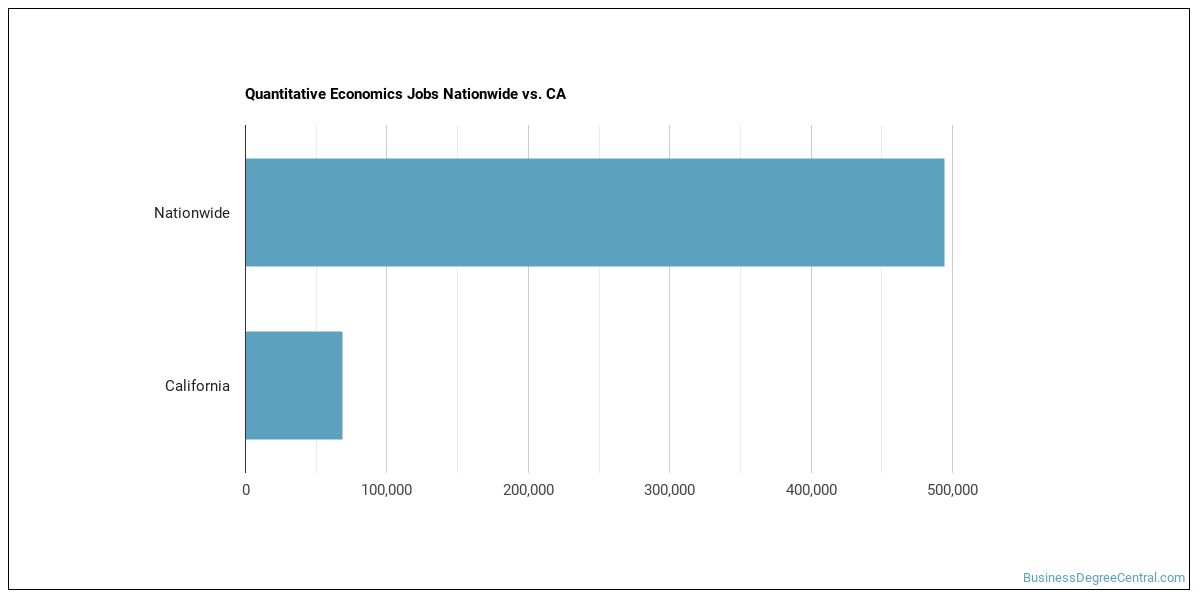
In this state, there are 151,230 people employed in jobs related to an Econometrics and Quantitative Economics degree, compared to 955,460 nationwide.
Wages for Quantitative Economics Jobs in California
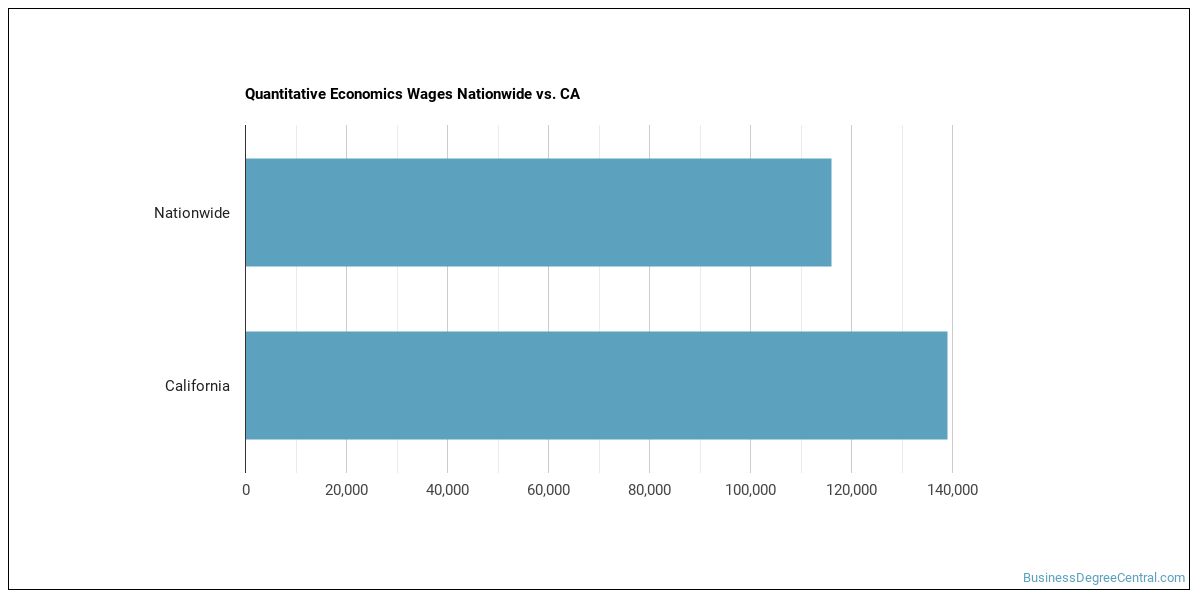
In this state, Econometrics and Quantitative Economics grads earn an average of $174,295. Nationwide, they make an average of $139,028.
Most Popular Quantitative Economics Programs in CA
Our data covers 23 colleges in California offering Econometrics and Quantitative Economics degrees. Learn about the most popular 23 below:

Graduates earn a median salary of $41,763 in their first year after graduation. About 9% of those who apply are admitted. The full-time student retention rate is 97%.
Graduates earn a median salary of $38,259 in their first year after graduation. About 28% of those who apply are admitted. The full-time student retention rate is 92%.
Grads earn a median early-career salary of $57,445 after earning their degree at this institution. About 12% of those who apply are admitted. 97% of full-time students return after their first year.
One year after graduating, alumni of this school earn a median of $41,123 a year. With an admission rate of 42%, getting in takes some planning. The full-time student retention rate is 93%.
Graduates earn a median salary of $63,275 in their first year after graduation. The school admits about 10% of applicants. 96% of full-time students return after their first year.
Grads earn a median early-career salary of $33,932 after earning their degree at this institution. The school admits about 63% of applicants. 88% of full-time students return after their first year.
Grads earn a median early-career salary of $89,527 after earning their degree at this institution. With an admission rate of 4%, getting in takes some planning. The full-time student retention rate is 98%.
Grads earn a median early-career salary of $68,541 after earning their degree at this institution. With an admission rate of 11%, getting in takes some planning. The full-time student retention rate is 96%.
One year after graduating, alumni of this school earn a median of $40,474 a year. With an admission rate of 26%, getting in takes some planning. The full-time student retention rate is 94%.
Graduates earn a median salary of $59,470 in their first year after graduation. The school admits about 51% of applicants. 80% of full-time students return after their first year.
One year after graduating, alumni of this school earn a median of $45,330 a year. The school admits about 40% of applicants. 88% of full-time students return after their first year.
One year after graduating, alumni of this school earn a median of $58,993 a year. About 80% of those who apply are admitted. The full-time student retention rate is 86%.
Grads earn a median early-career salary of $41,100 after earning their degree at this institution. About 7% of those who apply are admitted. 96% of full-time students return after their first year.
One year after graduating, alumni of this school earn a median of $37,107 a year. With an admission rate of 63%, getting in takes some planning. 90% of full-time students return after their first year.
Graduates earn a median salary of $37,306 in their first year after graduation. About 40% of those who apply are admitted. 87% of full-time students return after their first year.
One year after graduating, alumni of this school earn a median of $78,094 a year.
Graduates earn a median salary of $41,936 in their first year after graduation. With an admission rate of 95%, getting in takes some planning. 75% of full-time students return after their first year.
One year after graduating, alumni of this school earn a median of $102,669 a year. The school admits about 3% of applicants. The full-time student retention rate is 98%.
Grads earn a median early-career salary of $62,831 after earning their degree at this institution. About 30% of those who apply are admitted. 95% of full-time students return after their first year.
Grads earn a median early-career salary of $37,612 after earning their degree at this institution. The school admits about 34% of applicants. The full-time student retention rate is 88%.
Graduates earn a median salary of $41,145 in their first year after graduation. The school admits about 96% of applicants. 84% of full-time students return after their first year.
One year after graduating, alumni of this school earn a median of $55,049 a year. With an admission rate of 47%, getting in takes some planning. 90% of full-time students return after their first year.
Quantitative Economics Careers in CA
Some of the careers Econometrics and Quantitative Economics majors go into include:
| Job Title | Nationwide Job Growth | Nationwide Median Salary |
|---|---|---|
| Compliance Managers | 13% | $117,178 |
| Economists | 11% | $73,611 |
| Wind Energy Development Managers | 10% | $169,952 |
| Regulatory Affairs Managers | 10% | $77,828 |
| Environmental Economists | 8% | $86,726 |
| Data Scientists | 8% | $106,295 |
| Biostatisticians | 7% | $121,594 |
| Statisticians | 7% | $130,349 |
| Managers, All Other | 6% | $95,684 |
| Wind Energy Operations Managers | 5% | $122,567 |
| Social Science Research Assistants | 5% | $41,630 |
| Economics Teachers, Postsecondary | 3% | $69,831 |
Related Majors in California
Below are some popular majors that are similar to Econometrics and Quantitative Economics.
| Major | Annual Graduates Nationwide |
|---|---|
| General Applied Mathematics | 4,209 |
| Agricultural Economics | 1,768 |
| Political Economy | 266 |
| Quantitative Psychology | 203 |
| Natural Resource Economics | 184 |
| Philosophy, Politics, and Economics | 164 |
| Mathematical Economics | 141 |
| Economics and Computer Science | 128 |
View all majors related to Quantitative Economics
Explore Major by State
Alabama
Arkansas
Connecticut
Florida
Hawaii
Indiana
Kentucky
Maryland
Minnesota
Montana
New Hampshire
New York
Ohio
Pennsylvania
South Carolina
Texas
Virgin Islands
West Virginia
View Nationwide Quantitative Economics Report
References
More about our data sources and methodologies.

BusinessDegreeCentral.com provides higher-education, college and university, degree, program, career, salary, and other helpful information to students, faculty, institutions, and other internet audiences. Presented information and data are subject to change. Inclusion on this website does not imply or represent a direct relationship with the company, school, or brand. Information, though believed correct at time of publication, may not be correct, and no warranty is provided. Contact the schools to verify any information before relying on it. Financial aid may be available for those who qualify. The displayed options may include sponsored or recommended results, not necessarily based on your preferences.
© BusinessDegreeCentral.com – All Rights Reserved.