Life As an Insurance Policy Processing Clerk
Job Description: Process applications for, changes to, reinstatement of, and cancellation of insurance policies. Duties include reviewing insurance applications to ensure that all questions have been answered, compiling data on insurance policy changes, changing policy records to conform to insured party’s specifications, compiling data on lapsed insurance policies to determine automatic reinstatement according to company policies, canceling insurance policies as requested by agents, and verifying the accuracy of insurance company records.
Life As an Insurance Policy Processing Clerk
- Process, prepare, and submit business or government forms, such as submitting applications for coverage to insurance carriers.
- Collect initial premiums and issue receipts.
- Review and verify data, such as age, name, address, and principal sum and value of property on insurance applications and policies.
- Notify insurance agent and accounting department of policy cancellation.
- Obtain computer printout of policy cancellations or retrieve cancellation cards from file.
- Modify, update, and process existing policies and claims to reflect any change in beneficiary, amount of coverage, or type of insurance.
Featured schools near , edit
Insurance Policy Processing Clerk Skills
Below is a list of the skills most Insurance Policy Processing Clerks say are important on the job.
Active Listening: Giving full attention to what other people are saying, taking time to understand the points being made, asking questions as appropriate, and not interrupting at inappropriate times.
Speaking: Talking to others to convey information effectively.
Reading Comprehension: Understanding written sentences and paragraphs in work related documents.
Writing: Communicating effectively in writing as appropriate for the needs of the audience.
Critical Thinking: Using logic and reasoning to identify the strengths and weaknesses of alternative solutions, conclusions or approaches to problems.
Judgment and Decision Making: Considering the relative costs and benefits of potential actions to choose the most appropriate one.
Other Insurance Policy Processing Clerk Job Titles
- Personal Lines Account Manager
- Policy Services Representative
- Customer Service Technician
- Insurance Checker
- Policy Title Typist
Are There Job Opportunities for Insurance Policy Processing Clerks?
In 2016, there was an estimated number of 308,500 jobs in the United States for Insurance Policy Processing Clerk. New jobs are being produced at a rate of 11.1% which is above the national average. The Bureau of Labor Statistics predicts 34,100 new jobs for Insurance Policy Processing Clerk by 2026. The BLS estimates 35,600 yearly job openings in this field.
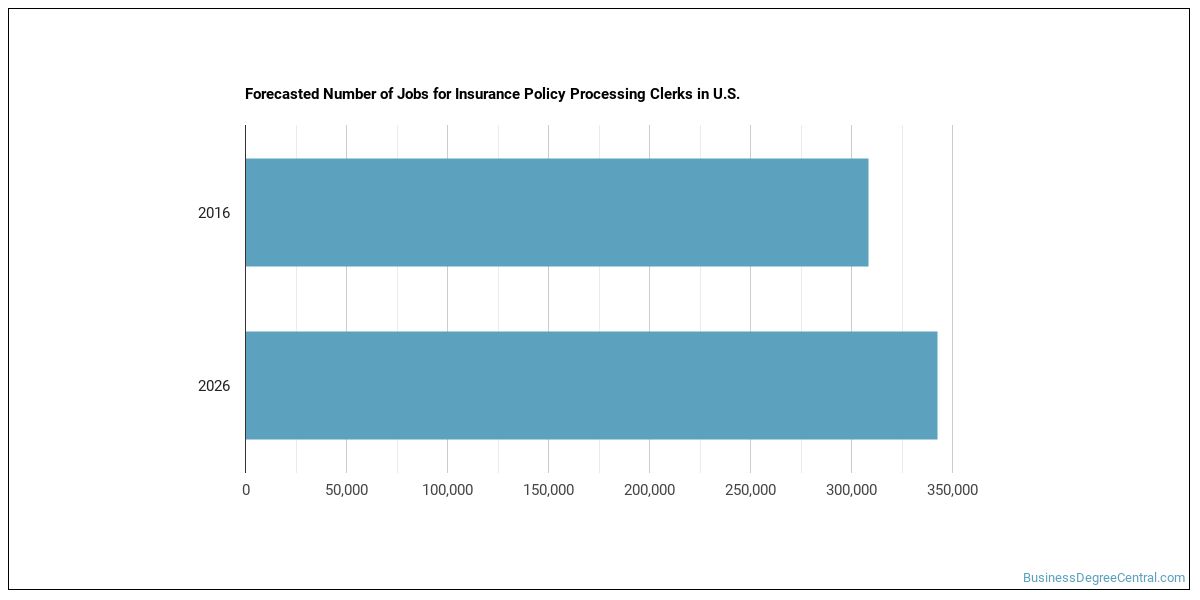
The states with the most job growth for Insurance Policy Processing Clerk are Utah, Arizona, and Iowa. Watch out if you plan on working in Maine, Vermont, or Oregon. These states have the worst job growth for this type of profession.
What is the Average Salary of an Insurance Policy Processing Clerk
The typical yearly salary for Insurance Policy Processing Clerks is somewhere between $27,540 and $60,500.
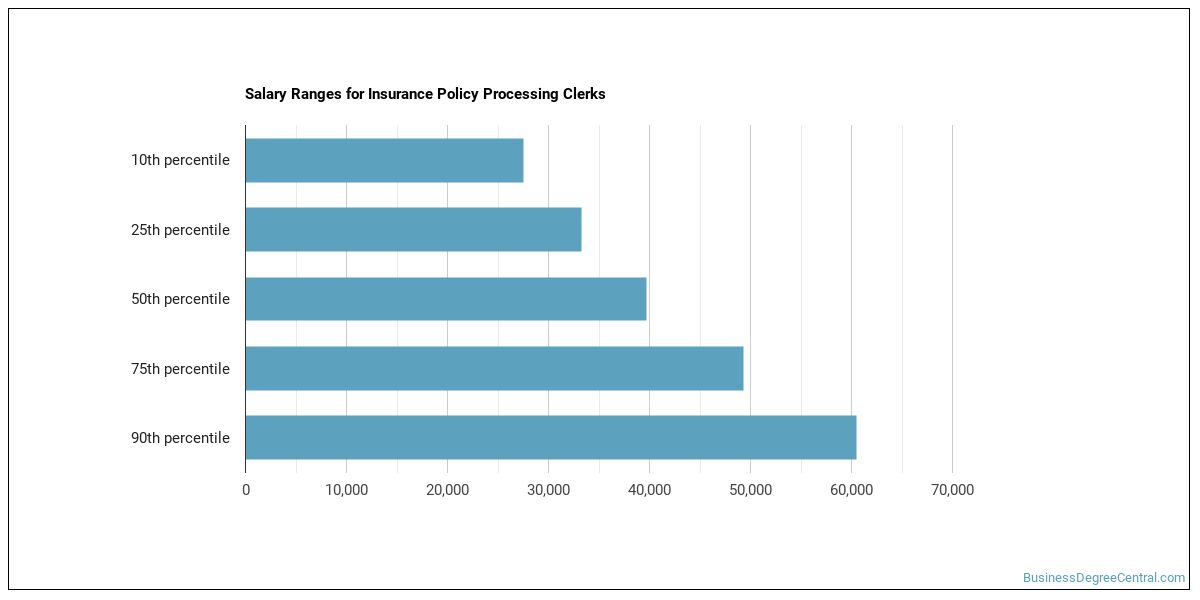
Insurance Policy Processing Clerks who work in District of Columbia, Connecticut, or Massachusetts, make the highest salaries.
Below is a list of the median annual salaries for Insurance Policy Processing Clerks in different U.S. states.
| State | Annual Mean Salary |
|---|---|
| Alabama | $37,000 |
| Alaska | $42,450 |
| Arizona | $42,760 |
| Arkansas | $35,960 |
| California | $42,690 |
| Colorado | $48,700 |
| Connecticut | $50,300 |
| Delaware | $40,540 |
| District of Columbia | $56,710 |
| Florida | $39,150 |
| Georgia | $46,190 |
| Hawaii | $40,270 |
| Idaho | $40,410 |
| Illinois | $43,540 |
| Indiana | $39,740 |
| Iowa | $43,500 |
| Kansas | $40,350 |
| Kentucky | $34,370 |
| Louisiana | $35,100 |
| Maine | $40,180 |
| Maryland | $47,600 |
| Massachusetts | $48,820 |
| Michigan | $38,310 |
| Minnesota | $44,700 |
| Mississippi | $33,420 |
| Missouri | $40,100 |
| Montana | $39,020 |
| Nebraska | $39,410 |
| Nevada | $40,700 |
| New Hampshire | $44,500 |
| New Jersey | $47,180 |
| New Mexico | $37,360 |
| New York | $48,740 |
| North Carolina | $43,180 |
| North Dakota | $41,610 |
| Ohio | $39,830 |
| Oklahoma | $42,120 |
| Oregon | $43,950 |
| Pennsylvania | $42,590 |
| Rhode Island | $45,300 |
| South Carolina | $36,850 |
| South Dakota | $33,540 |
| Tennessee | $37,880 |
| Texas | $39,950 |
| Utah | $40,940 |
| Vermont | $41,420 |
| Virginia | $42,030 |
| Washington | $45,810 |
| West Virginia | $33,710 |
| Wisconsin | $40,340 |
| Wyoming | $36,190 |
Tools & Technologies Used by Insurance Policy Processing Clerks
Although they’re not necessarily needed for all jobs, the following technologies are used by many Insurance Policy Processing Clerks:
- Microsoft Excel
- Microsoft Word
- Microsoft Office
- Microsoft PowerPoint
- Microsoft Outlook
- Web browser software
- Microsoft Access
- Data entry software
- Word processing software
- Spreadsheet software
- Database software
- Microsoft Internet Explorer
- Medical procedure coding software
- Healthcare common procedure coding system HCPCS
- Medical condition coding software
- IBM Lotus Notes
- Novell GroupWise
- Insurance rating software
How to Become an Insurance Policy Processing Clerk
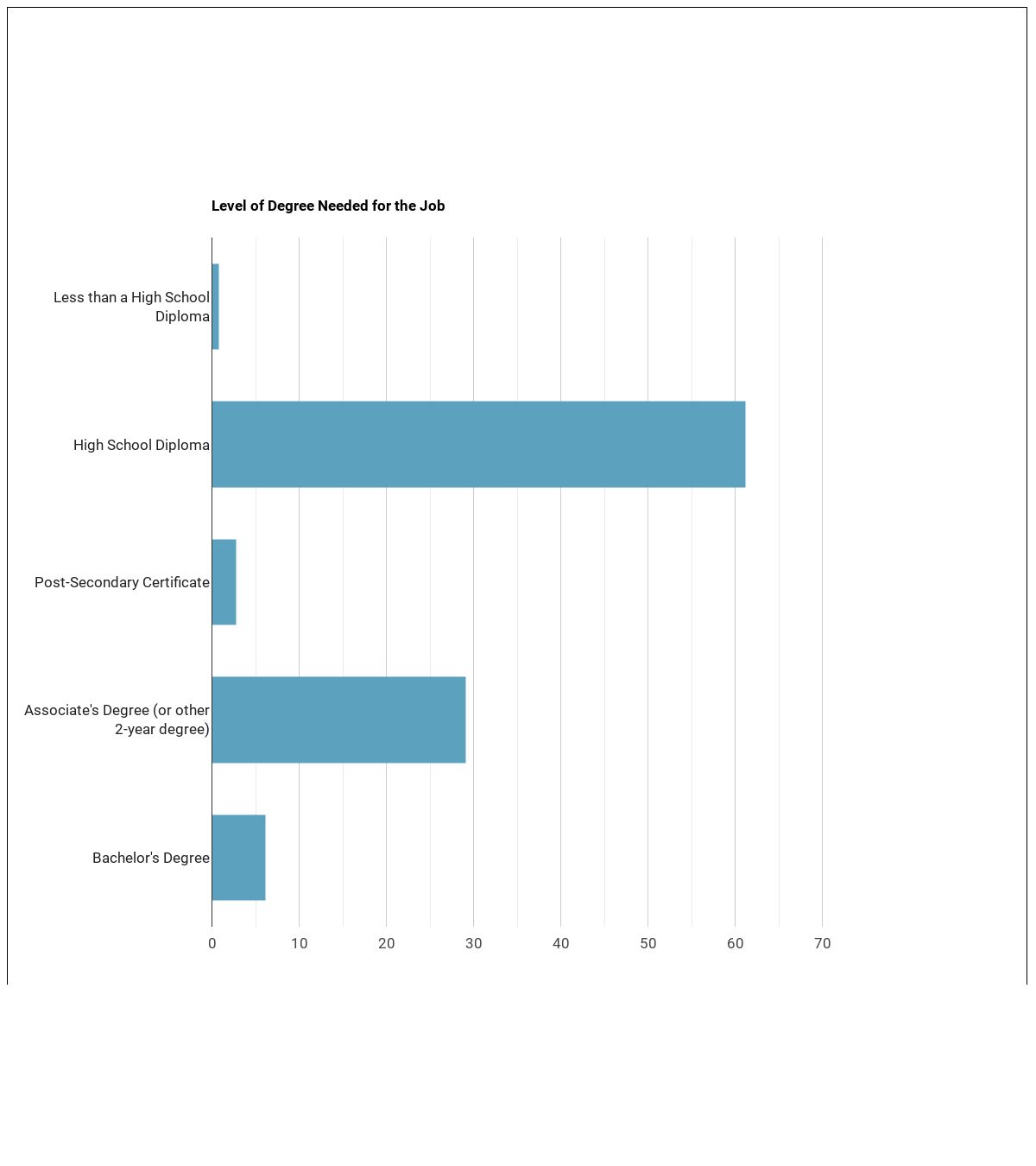
What education or degrees do I need to become an Insurance Policy Processing Clerk?
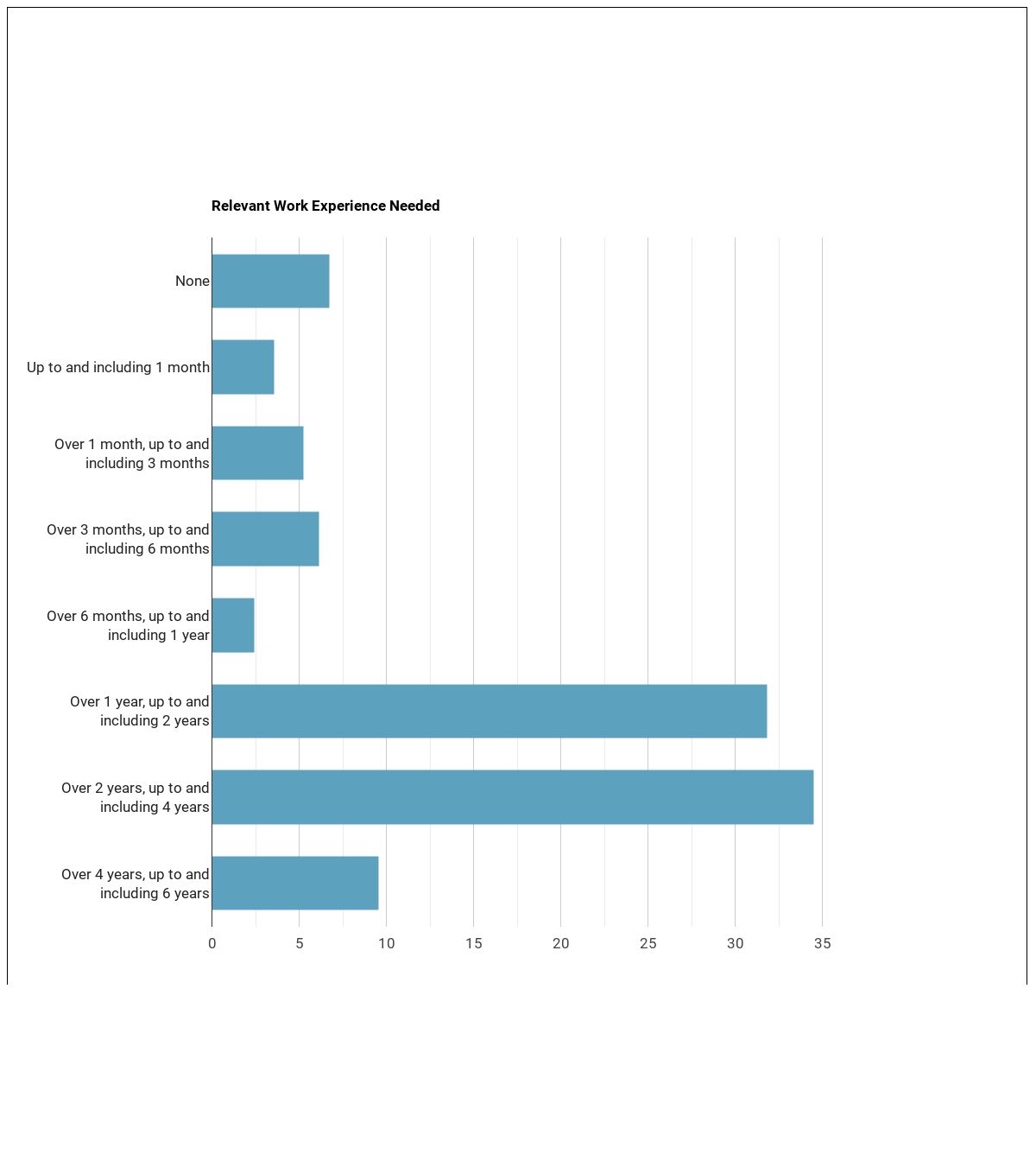
How Long Does it Take to Become an Insurance Policy Processing Clerk?
Insurance Policy Processing Clerks Sector
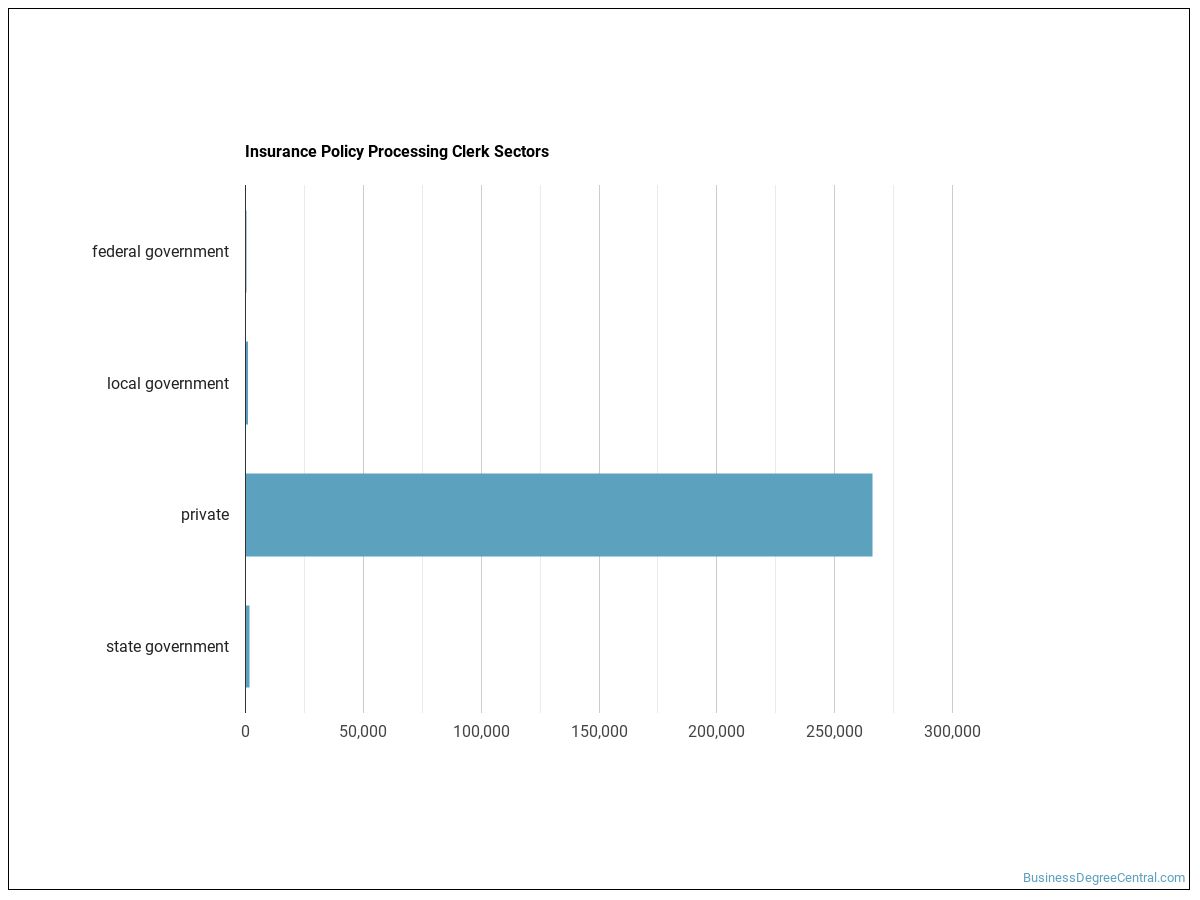
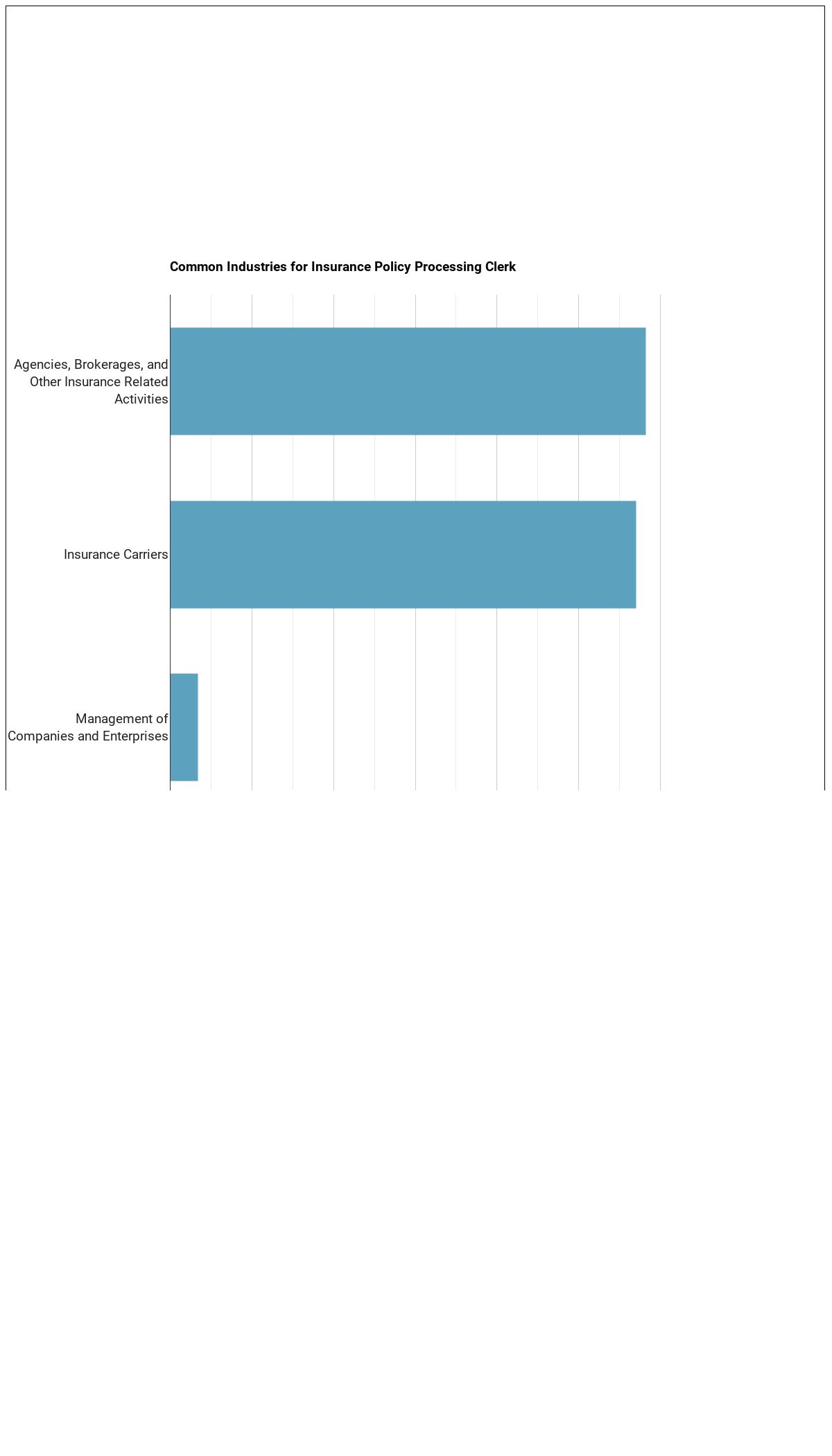
Insurance Policy Processing Clerks work in the following industries:
Related Careers
Those interested in being an Insurance Policy Processing Clerk may also be interested in:
References:
Image Credit: Jace Armstrong via public domain
More about our data sources and methodologies.
Featured Schools

You have goals. Southern New Hampshire University can help you get there. Whether you need a bachelor's degree to get into a career or want a master's degree to move up in your current career, SNHU has an online program for you. Find your degree from over 200 online programs.
Visit School
BusinessDegreeCentral.com provides higher-education, college and university, degree, program, career, salary, and other helpful information to students, faculty, institutions, and other internet audiences. Presented information and data are subject to change. Inclusion on this website does not imply or represent a direct relationship with the company, school, or brand. Information, though believed correct at time of publication, may not be correct, and no warranty is provided. Contact the schools to verify any information before relying on it. Financial aid may be available for those who qualify. The displayed options may include sponsored or recommended results, not necessarily based on your preferences.
© BusinessDegreeCentral.com – All Rights Reserved.