Compensation and Benefits Managers in Washington
Want to work as a Compensation and Benefits Managers in Washington? Here’s what the data says. Plan, direct, or coordinate compensation and benefits activities of an organization. Job analysis and position description managers are included in “Human Resources Managers” (11-3121).
What do Compensation and Benefits Managers Make in Washington?
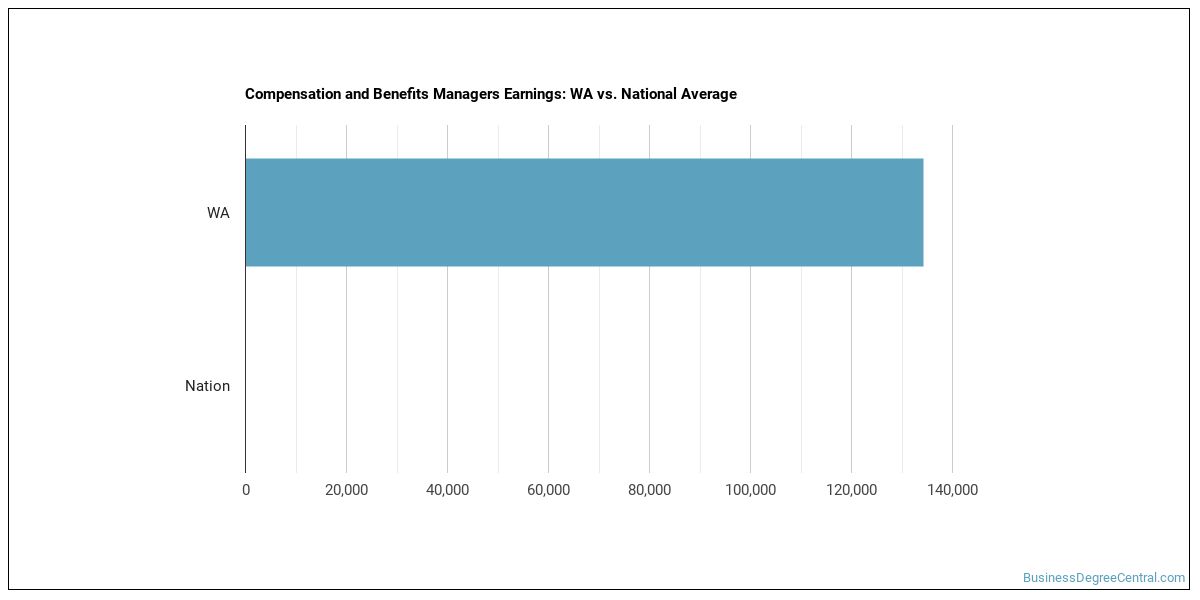
The compensation and benefits managers working in Washington, the typical annual salary is $206,320 per year (or about $99.19/hour).
| Wage Statistic | Annual | Hourly |
|---|---|---|
| 10th percentile | $117,930 | $56.70 |
| 25th percentile | $141,530 | $68.04 |
| Median (50th) | $206,320 | $99.19 |
| 75th percentile | n/a | n/a |
| 90th percentile | n/a | n/a |

The job concentration index in Washington nationwide is 1.12, indicating that compensation and benefits managers are more concentrated here than the national average.
National Wage Comparison
Nationally, compensation and benefits managers earn a median of $107,570 per year ($51.72/hour), higher than the Washington median.
Employment Outlook
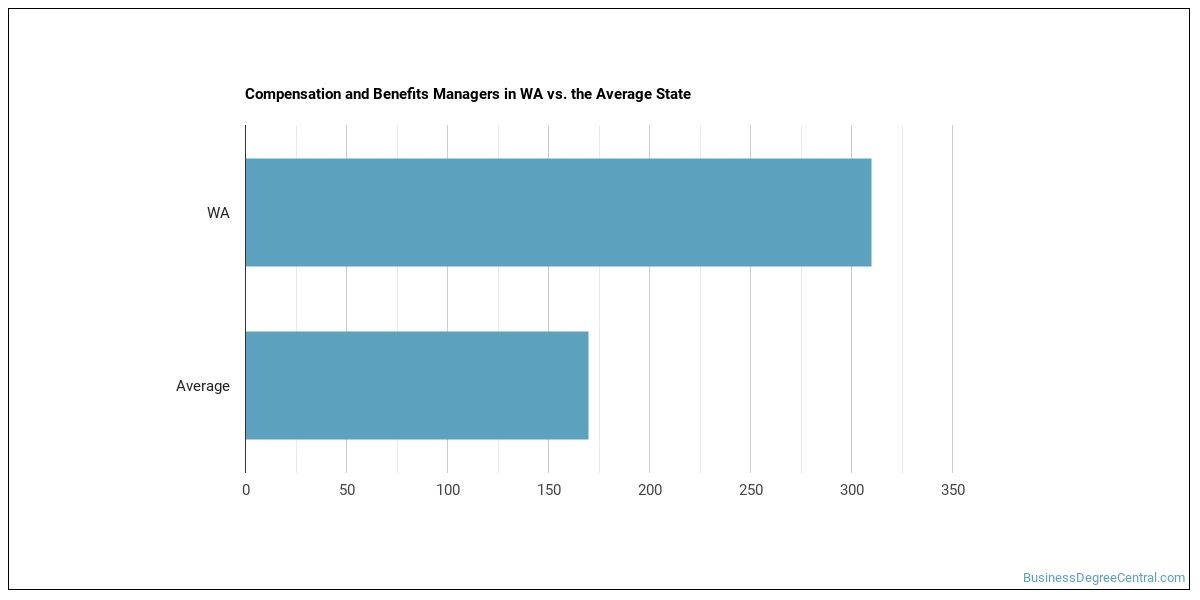
There are roughly 239,600 compensation and benefits managers in the U.S.. In Washington alone, around 510 people work in this role. That puts the state above the typical state, which employs around 220 compensation and benefits managers.

Top Washington Metros for Compensation and Benefits Managers
The metro areas below employ the most compensation and benefits managers in Washington.
| Metro Area | Number Employed | Annual Median Salary |
|---|---|---|
| Seattle-Tacoma-Bellevue, WA | 400 | $214,220 |
Top States for Compensation and Benefits Managers Employment
These states have the highest employment of compensation and benefits managers work.
| State | Number Employed |
|---|---|
| California | 2,840 |
| Texas | 1,950 |
| New York | 1,760 |
| Florida | 1,480 |
| Georgia | 870 |
| New Jersey | 810 |
| North Carolina | 750 |
| Pennsylvania | 710 |
| Massachusetts | 670 |
| Illinois | 520 |
| Washington | 510 |
| Tennessee | 480 |
| Virginia | 480 |
| Michigan | 470 |
| Wisconsin | 450 |
| Ohio | 410 |
| Maryland | 370 |
| Connecticut | 330 |
| Minnesota | 310 |
| Missouri | 270 |
Highest-Paying States for Compensation and Benefits Managers
Where compensation and benefits managers earn the most: compensation and benefits managers.
| State | Annual Median Salary |
|---|---|
| Washington | $206,320 |
| Rhode Island | $183,140 |
| New Jersey | $182,660 |
| Massachusetts | $181,910 |
| New York | $176,390 |
| Virginia | $171,300 |
| District of Columbia | $160,800 |
| California | $160,740 |
| Colorado | $159,570 |
| Connecticut | $147,070 |
Skills
Top compensation and benefits managers skills, rated on an importance scale of 0 to 5:
Knowledge Areas
Important knowledge areas for this occupation, rated on an importance scale of 0 to 5:
Abilities
The abilities that matter most for compensation and benefits managers, rated on an importance scale of 0 to 5:
Daily Tasks
Common tasks include:
- Direct preparation and distribution of written and verbal information to inform employees of benefits, compensation, and personnel policies.
- Design, evaluate, and modify benefits policies to ensure that programs are current, competitive, and in compliance with legal requirements.
- Fulfill all reporting requirements of all relevant government rules and regulations, including the Employee Retirement Income Security Act (ERISA).
- Analyze compensation policies, government regulations, and prevailing wage rates to develop competitive compensation plan.
- Identify and implement benefits to increase the quality of life for employees by working with brokers and researching benefits issues.
- Manage the design and development of tools to assist employees in benefits selection, and to guide managers through compensation decisions.
- Administer, direct, and review employee benefit programs, including the integration of benefit programs following mergers and acquisitions.
- Mediate between benefits providers and employees, such as by assisting in handling employees' benefits-related questions or taking suggestions.
- Plan, direct, supervise, and coordinate work activities of subordinates and staff relating to employment, compensation, labor relations, and employee relations.
- Prepare detailed job descriptions and classification systems and define job levels and families, in partnership with other managers.
- Develop methods to improve employment policies, processes, and practices, and recommend changes to management.
- Formulate policies, procedures and programs for recruitment, testing, placement, classification, orientation, benefits and compensation, and labor and industrial relations.
Work Activities
- Communicating with Supervisors, Peers, or Subordinates
- Establishing and Maintaining Interpersonal Relationships
- Getting Information
- Working with Computers
- Making Decisions and Solving Problems
- Evaluating Information to Determine Compliance with Standards
- Updating and Using Relevant Knowledge
- Communicating with People Outside the Organization
- Developing Objectives and Strategies
- Analyzing Data or Information
- Organizing, Planning, and Prioritizing Work
- Processing Information
Tools & Technology
Software and systems commonly involved: Hot technologies: Adobe Illustrator, Adobe Photoshop, Intuit QuickBooks In-demand technologies: Microsoft Excel
What Major Will Prepare You For This Career?
Several college majors map to this occupation:
- Business Administration & Management
- Human Resource Management
- Insurance
Featured schools near , edit
Related Careers
Related occupations to compensation and benefits managers include:
- Financial Managers
- Treasurers and Controllers
- Human Resources Managers
- Medical and Health Services Managers
- Social and Community Service Managers
- Compliance Managers
Also Known As
Benefits Admin (Benefits Administrator), Benefits Advisor, Benefits Coordinator, Benefits Director, Benefits Manager, Compensation Director, Compensation Manager, Compensation Program Manager, Compensation and Benefits Director, Compensation and Benefits Manager, Employee Benefits Account Manager, Employee Benefits Coordinator, Employee Benefits Director, Employee Benefits Manager, Global Benefits Manager.
References
- U.S. Bureau of Labor Statistics, Occupational Employment and Wage Statistics — https://www.bls.gov/oes/
- O*NET Online — https://www.onetonline.org/
- BLS Employment Projections — https://www.bls.gov/emp/
- O*NET-SOC code: 11-3111.00

BusinessDegreeCentral.com provides higher-education, college and university, degree, program, career, salary, and other helpful information to students, faculty, institutions, and other internet audiences. Presented information and data are subject to change. Inclusion on this website does not imply or represent a direct relationship with the company, school, or brand. Information, though believed correct at time of publication, may not be correct, and no warranty is provided. Contact the schools to verify any information before relying on it. Financial aid may be available for those who qualify. The displayed options may include sponsored or recommended results, not necessarily based on your preferences.
© BusinessDegreeCentral.com – All Rights Reserved.