Telephone Operators: Career Profile
Provide information by accessing alphabetical, geographical, or other directories. Assist customers with special billing requests, such as charges to a third party and credits or refunds for incorrectly dialed numbers or bad connections. May handle emergency calls and assist children or people with physical disabilities to make telephone calls.
Featured schools near , edit
The Daily Work of Telephone Operators Perform?
Typical responsibilities of telephone operators include:
- Observe signal lights on switchboards, and dial or press buttons to make connections.
- Operate telephone switchboards and systems to advance and complete connections, including those for local, long distance, pay telephone, mobile, person-to-person, and emergency calls.
- Listen to customer requests, referring to alphabetical or geographical directories to answer questions and provide telephone information.
- Update directory information.
- Suggest and check alternate spellings, locations, or listing formats to customers lacking details or complete information.
- Perform clerical duties such as typing, proofreading, and sorting mail.
- Offer special assistance to persons such as those who are unable to dial or who are in emergency situations.
Key Skills and Knowledge
Effective telephone operators draw on a mix of skills and domain knowledge.
Key Skills
These are the skills most important for this role, rated on an importance scale of 0 to 5:
Core Knowledge
Types of Telephone Operators Jobs
Common job titles for this role include:
- 411 Directory Assistance Operator (411 Directory Assistance Op)
- Central Office Operator (CO Op)
- Change Number Operator (Change Number Op)
- Charge Operator (Charge Op)
- Communications Operator (Communications Op)
- Customer Service Assistant
- Directory Assistance Operator (Directory Assistance Op)
- Directory Operator (Directory Op)
How Many Telephone Operators Are There?
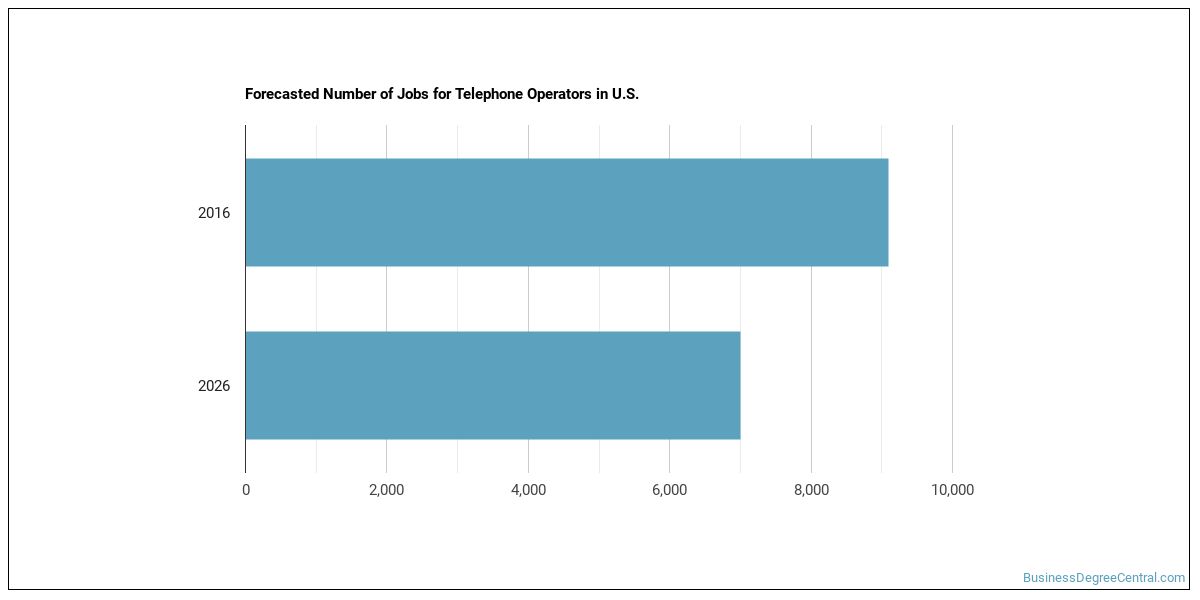
There are roughly 886,197 telephone operators working in the United States today. Employment is projected to grow by +3.3% over the projection horizon.
How Much Do Telephone Operators Make?
| Statistic | Value |
|---|---|
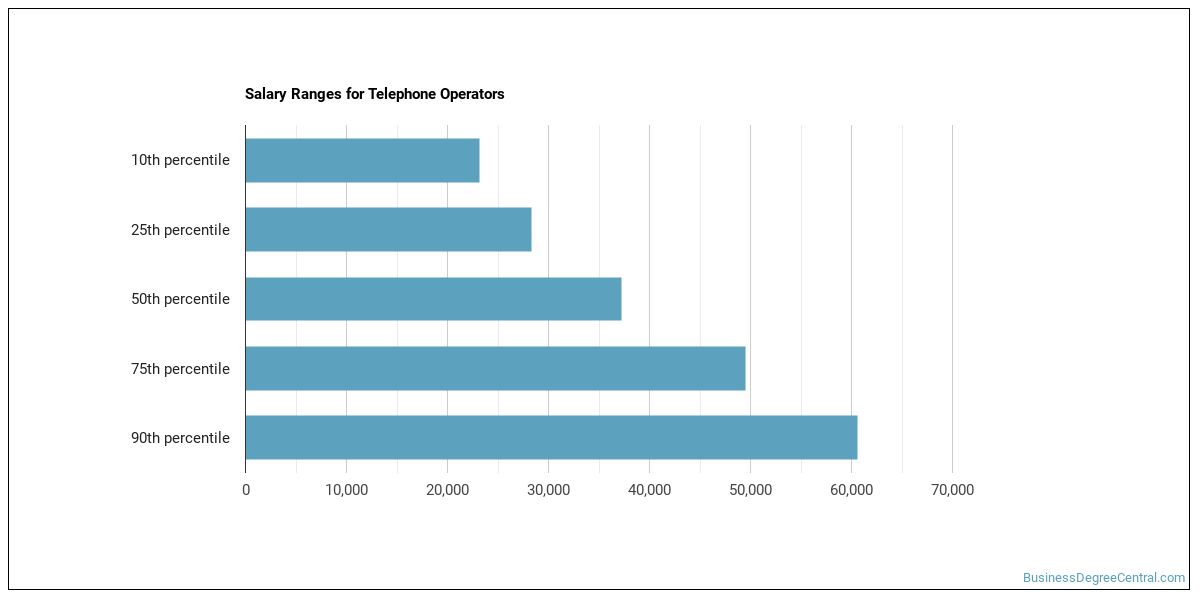
| Annual median | $53,949 |
| Hourly median | $25.94 |
| 10th percentile | $33,007 |
| 25th percentile | $43,478 |
| 75th percentile | $64,420 |
| 90th percentile | $74,891 |
Compensation varies based on experience, location, and industry.
Pay by State
| State | Annual median salary |
|---|---|
| California | $56,770 |
| New York | $53,510 |
| Hawaii | $52,160 |
| District of Columbia | $47,890 |
| Massachusetts | $46,370 |
| Maryland | $41,220 |
| New Jersey | $40,770 |
| Connecticut | $40,620 |
| Michigan | $40,300 |
| Ohio | $38,110 |
| Kentucky | $38,100 |
| Wisconsin | $37,830 |
| Oklahoma | $37,400 |
| Texas | $36,800 |
| Georgia | $36,510 |
| South Carolina | $36,160 |
| Pennsylvania | $36,040 |
| Louisiana | $34,050 |
| Puerto Rico | $27,410 |
Where Telephone Operators Earn the Most
Earnings for telephone operators vary by region. These regions lead on median pay:
| Region | Median annual wage | Share of U.S. jobs | Location quotient |
|---|---|---|---|
| Far Western US | $49,510 | 9.5% | 0.82 |
| Middle Atlantic | $43,170 | 39.9% | 2.01 |
| New England | $40,620 | 1.1% | 0.74 |
| Great Lakes | $38,635 | 9.2% | 1.14 |
| Southwest | $36,835 | 24.9% | 1.74 |
| Southeast | $36,350 | 14.3% | 1.47 |
| Other U.S. Territories | $27,410 | 1.1% | 1.29 |
Where the Jobs Cluster
| Metro area | State | Median annual wage | Employment |
|---|---|---|---|
| Los Angeles-Long Beach-Anaheim, CA | CA | $52,990 | 70 |
| New York-Newark-Jersey City, NY-NJ | NY | $51,390 | 380 |
| Boston-Cambridge-Newton, MA-NH | MA | $46,370 | |
| Washington-Arlington-Alexandria, DC-VA-MD-WV | DC | $44,400 | 90 |
| Worcester, MA | MA | $43,760 | |
| Austin-Round Rock-San Marcos, TX | TX | $43,680 | |
| Atlanta-Sandy Springs-Roswell, GA | GA | $42,440 | 50 |
| Baltimore-Columbia-Towson, MD | MD | $41,220 | 70 |
Top Industries Employing Telephone Operators
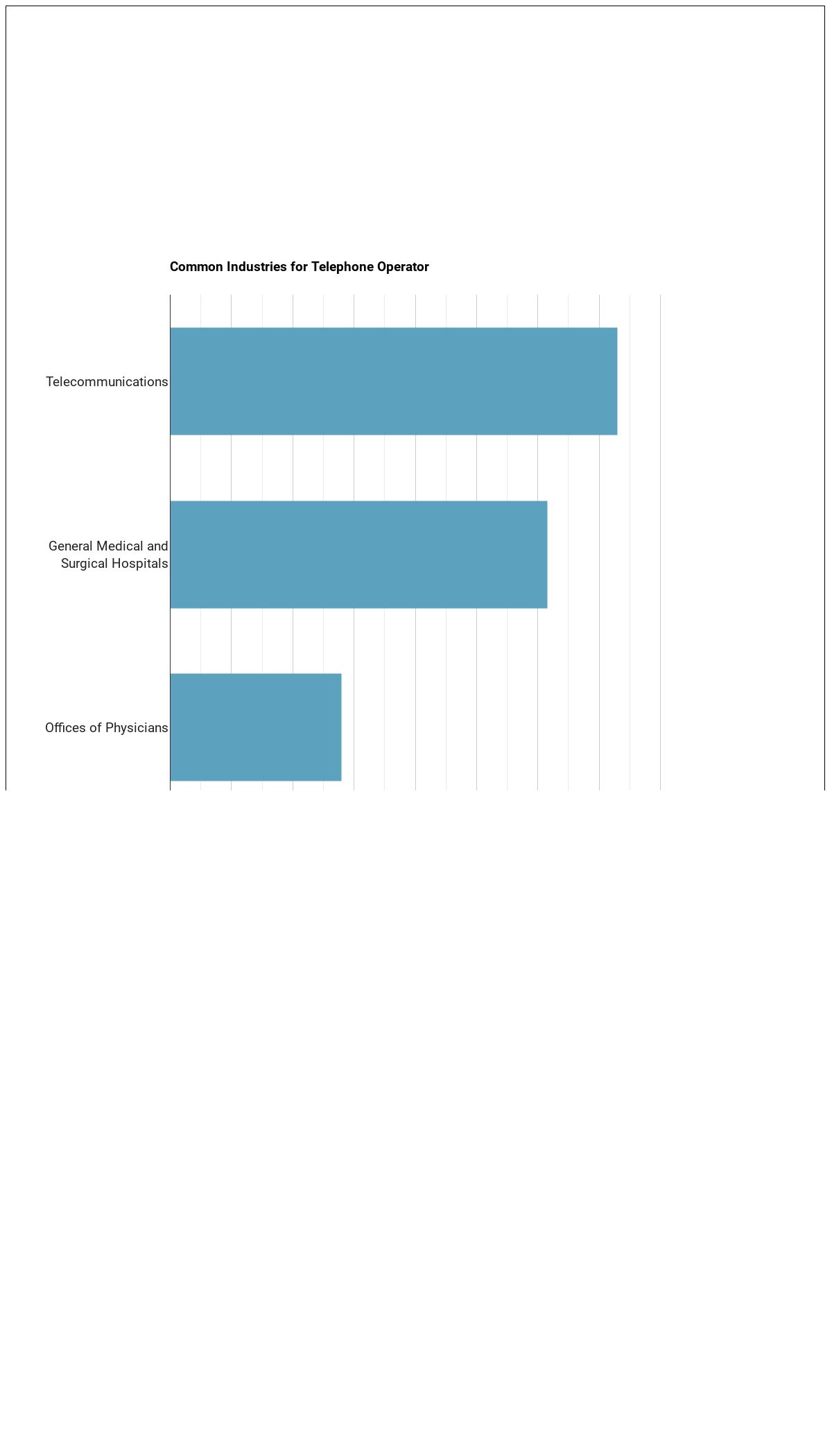
The largest employers of telephone operators are concentrated in the following sectors:
| Industry | Employment | Median annual wage |
|---|---|---|
| Health Care and Social Assistance | 2,170 | $39,030 |
| Information | 380 | $47,760 |
| Accommodation and Food Services | 360 | $36,910 |
| Management of Companies and Enterprises | 80 | $49,140 |
| Educational Services | 80 | $39,090 |
| Retail Trade | 70 | $37,710 |
| Finance and Insurance | 60 | $35,550 |

Below are examples of industries where telephone operators work:
Tech Stack
- Spreadsheet software: Microsoft Excel (hot technology)
- Office suite software: Microsoft Office software (hot technology)
- Electronic mail software: Microsoft Outlook (hot technology)
- Presentation software: Microsoft PowerPoint (hot technology)
- Operating system software: Microsoft Windows (hot technology)
- Word processing software: Microsoft Word (hot technology)
The Day-to-Day Environment
Daily working conditions for telephone operators is shaped by the following characteristics:
- Telephone Conversations
- Contact With Others
- Deal With External Customers or the Public in General
- Work With or Contribute to a Work Group or Team
- Face-to-Face Discussions with Individuals and Within Teams
How to Become Telephone Operators
Most telephone operators positions require a high school diploma or equivalent as the typical entry-level education. The role falls in Some Preparation Needed (Job Zone 2), indicating the level of preparation typically expected.
Similar Occupations
Similar Occupations
- Computer Network Support Specialists (Supplemental)
- Cashiers (Supplemental)
- Sales Representatives of Services, Except Advertising, Insurance, Financial Services, and Travel (Primary-Long)
- Telemarketers (Primary-Short)
- Switchboard Operators, Including Answering Service (Primary-Short)
- Billing and Posting Clerks (Supplemental)
- Customer Service Representatives (Primary-Short)
- File Clerks (Supplemental)
References
This profile draws on the following authoritative sources:
- U.S. Bureau of Labor Statistics — Occupational Employment and Wage Statistics (OEWS) for employment and wage data by state and industry.
- BLS Employment Projections for total employment and growth forecasts.
- O*NET (Occupational Information Network) for skills, knowledge, tasks, work activities, work context, technology, and education-zone data.
SOC code: 43-2021.00 (Telephone Operators).

BusinessDegreeCentral.com provides higher-education, college and university, degree, program, career, salary, and other helpful information to students, faculty, institutions, and other internet audiences. Presented information and data are subject to change. Inclusion on this website does not imply or represent a direct relationship with the company, school, or brand. Information, though believed correct at time of publication, may not be correct, and no warranty is provided. Contact the schools to verify any information before relying on it. Financial aid may be available for those who qualify. The displayed options may include sponsored or recommended results, not necessarily based on your preferences.
© BusinessDegreeCentral.com – All Rights Reserved.