Public Safety Telecommunicators: Job Description
Operate telephone, radio, or other communication systems to receive and communicate requests for emergency assistance at 9-1-1 public safety answering points and emergency operations centers. Take information from the public and other sources regarding crimes, threats, disturbances, acts of terrorism, fires, medical emergencies, and other public safety matters. May coordinate and provide information to law enforcement and emergency response personnel. May access sensitive databases and other information sources as needed. May provide additional instructions to callers based on knowledge of and certification in law enforcement, fire, or emergency medical procedures.
Featured schools near , edit
The Daily Work of Public Safety Telecommunicators Take On?
The day-to-day responsibilities of public safety telecommunicators span:
- Provide emergency medical instructions to callers.
- Question callers to determine their locations and the nature of their problems to determine type of response needed.
- Determine response requirements and relative priorities of situations, and dispatch units in accordance with established procedures.
- Receive incoming telephone or alarm system calls regarding emergency and non-emergency police and fire service, emergency ambulance service, information, and after-hours calls for departments within a city.
- Relay information and messages to and from emergency sites, to law enforcement agencies, and to all other individuals or groups requiring notification.
- Record details of calls, dispatches, and messages.
- Monitor various radio frequencies, such as those used by public works departments, school security, and civil defense, to stay apprised of developing situations.
- Read and effectively interpret small-scale maps and information from a computer screen to determine locations and provide directions.
What Public Safety Telecommunicators Need to Know
Effective public safety telecommunicators rely on a mix of skills and domain knowledge.
Key Skills
The competencies most central to this role, rated on an importance scale of 0 to 5:
Knowledge Areas
Other Public Safety Telecommunicators Job Titles
Common job titles for this role include:
- 911 Dispatcher
- 911 Emergency Dispatcher
- 911 Emergency Services Dispatcher
- 911 Operator
- 911 Telecommunicator
- Alarm Operator
- Ambulance Dispatcher
- Call Person
Employment and Demand
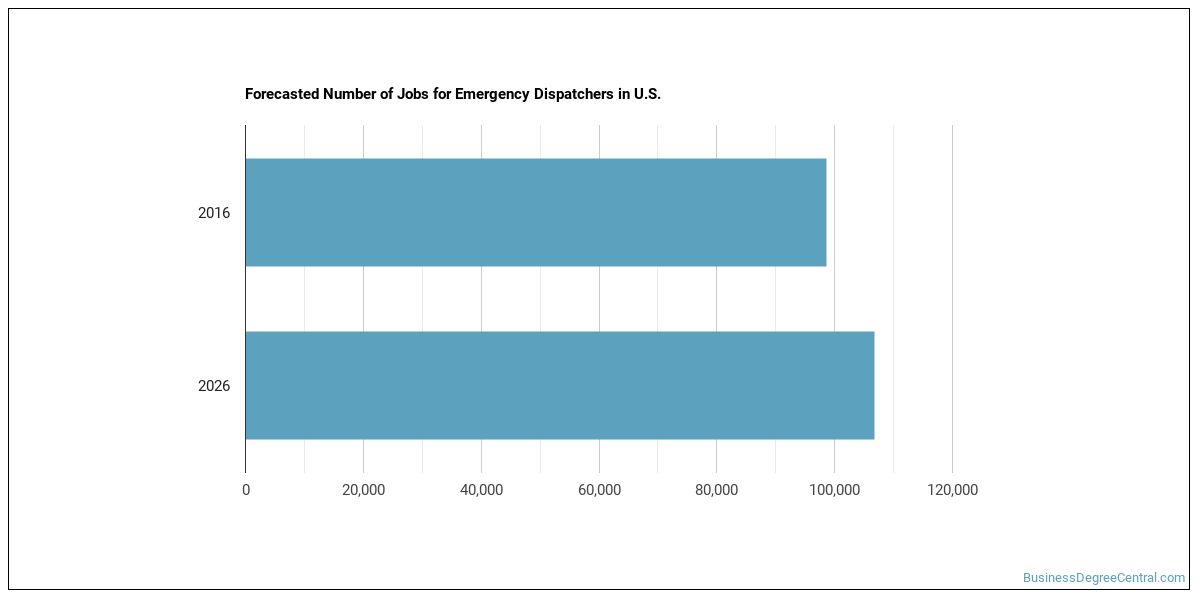
The U.S. employs around 1,648,888 public safety telecommunicators working in the United States today. This occupation is expected to grow by +1.2% over the projection horizon.
How Much Do Public Safety Telecommunicators Make?
| Statistic | Value |
|---|---|
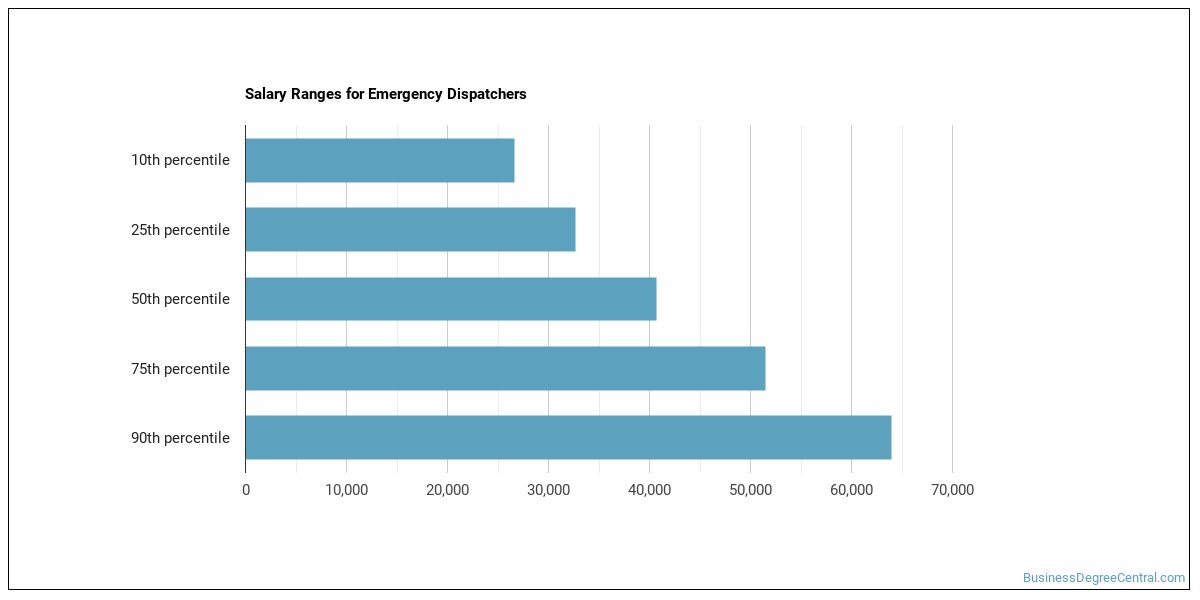
| Annual median | $58,404 |
| Hourly median | $28.08 |
| 10th percentile | $38,768 |
| 25th percentile | $48,586 |
| 75th percentile | $68,222 |
| 90th percentile | $78,040 |
Pay can vary substantially based on experience, location, and industry.
How Much Do Public Safety Telecommunicators Make in Different U.S. States?
| State | Annual median salary |
|---|---|
| California | $78,210 |
| Washington | $77,310 |
| Oregon | $70,690 |
| Minnesota | $64,920 |
| Alaska | $63,390 |
| Connecticut | $63,210 |
| Colorado | $62,460 |
| Illinois | $59,860 |
| New York | $59,440 |
| Massachusetts | $59,310 |
| New Jersey | $58,760 |
| Ohio | $56,770 |
| Maryland | $56,760 |
| District of Columbia | $56,710 |
| Vermont | $55,330 |
| Hawaii | $54,790 |
| Rhode Island | $54,540 |
| Wisconsin | $54,340 |
| Arizona | $54,270 |
| New Hampshire | $53,850 |
| North Dakota | $52,770 |
| Maine | $52,620 |
| Delaware | $52,450 |
| Iowa | $52,380 |
| Nevada | $51,760 |
| Utah | $51,760 |
| Idaho | $51,090 |
| Pennsylvania | $49,330 |
| Michigan | $49,320 |
| Florida | $48,860 |
| Nebraska | $48,660 |
| New Mexico | $48,560 |
| Virginia | $48,450 |
| Montana | $48,440 |
| Texas | $48,410 |
| Indiana | $48,200 |
| Wyoming | $47,150 |
| Tennessee | $45,730 |
| South Dakota | $45,180 |
| North Carolina | $44,370 |
| Missouri | $43,840 |
| Kansas | $40,680 |
| Georgia | $40,500 |
| South Carolina | $40,140 |
| Kentucky | $40,000 |
| Louisiana | $38,830 |
| West Virginia | $38,650 |
| Alabama | $38,540 |
| Arkansas | $37,140 |
| Oklahoma | $37,000 |
| Mississippi | $33,280 |
| Puerto Rico | $26,460 |
Where Public Safety Telecommunicators Earn the Most
Pay for public safety telecommunicators shift depending on where you work. Top regions by median wage:
| Region | Median annual wage | Share of U.S. jobs | Location quotient |
|---|---|---|---|
| Far Western US | $74,476 | 13.7% | 0.87 |
| New England | $58,722 | 6.4% | 1.35 |
| Middle Atlantic | $56,484 | 14.7% | 1.02 |
| Great Lakes | $54,889 | 14.0% | 1.01 |
| Rocky Mountains | $54,850 | 3.8% | 1.05 |
| Plains States | $48,689 | 7.3% | 1.14 |
| Southwest | $47,319 | 11.8% | 1.01 |
| Southeast | $43,113 | 28.1% | 1.20 |
Top Metro Areas
| Metro area | State | Median annual wage | Employment |
|---|---|---|---|
| San Jose-Sunnyvale-Santa Clara, CA | CA | $125,310 | 420 |
| San Francisco-Oakland-Fremont, CA | CA | $103,110 | 1,130 |
| San Luis Obispo-Paso Robles, CA | CA | $87,870 | 70 |
| Vallejo, CA | CA | $87,220 | 170 |
| Napa, CA | CA | $84,260 | 60 |
| Santa Rosa-Petaluma, CA | CA | $83,110 | 160 |
| Anchorage, AK | AK | $81,440 | 130 |
| Oxnard-Thousand Oaks-Ventura, CA | CA | $81,420 | 160 |
Industry Breakdown
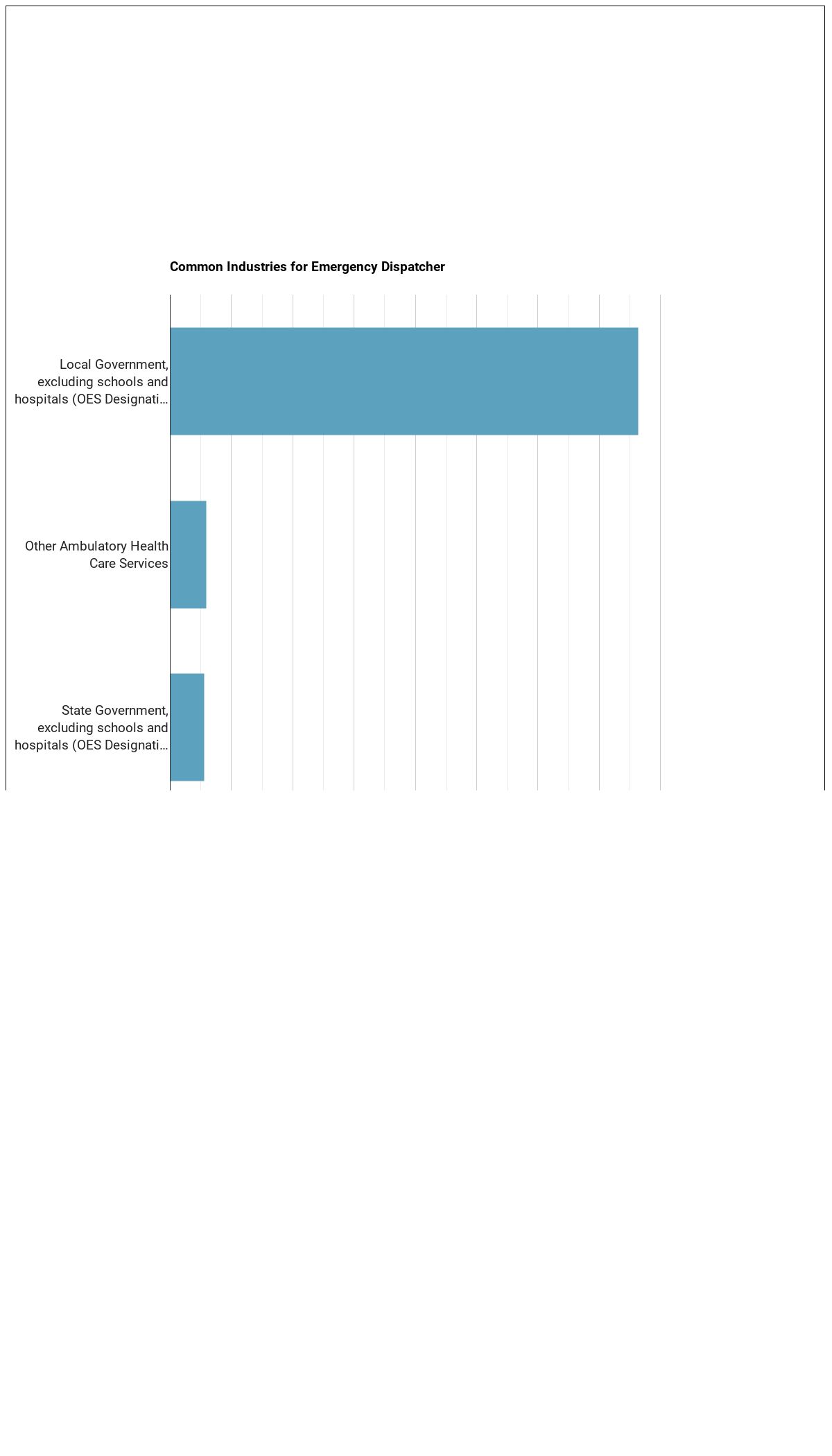
The bulk of public safety telecommunicators work in these industries:
| Industry | Employment | Median annual wage |
|---|---|---|
| Health Care and Social Assistance | 8,360 | $45,370 |
| Educational Services | 3,240 | $46,620 |
| Professional, Scientific, and Technical Services | 110 | $51,300 |

Below are examples of industries where public safety telecommunicators work:
Software Public Safety Telecommunicators Use
- Data base user interface and query software: Microsoft Access (hot technology)
- Spreadsheet software: Microsoft Excel (hot technology)
- Office suite software: Microsoft Office software (hot technology)
- Electronic mail software: Microsoft Outlook (hot technology)
- Presentation software: Microsoft PowerPoint (hot technology)
- Document management software: Microsoft SharePoint (hot technology)
- Word processing software: Microsoft Word (hot technology)
- Enterprise resource planning ERP software: SAP software (hot technology)
The Day-to-Day Environment
The work environment for public safety telecommunicators tends to involve the following characteristics:
- Indoors, Environmentally Controlled
- Telephone Conversations
- Contact With Others
- Spend Time Sitting
- Deal With External Customers or the Public in General
How to Become Public Safety Telecommunicators
Most public safety telecommunicators positions require a high school diploma or equivalent as the typical entry-level education. This occupation sits in Some Preparation Needed (Job Zone 2), signaling the level of preparation typically expected.
Other Careers to Consider
Similar Occupations
- Security Managers (Supplemental)
- Emergency Management Directors (Supplemental)
- Security Management Specialists (Supplemental)
- Emergency Medical Technicians (Primary-Short)
- Paramedics (Primary-Short)
- First-Line Supervisors of Police and Detectives (Supplemental)
- First-Line Supervisors of Firefighting and Prevention Workers (Supplemental)
- First-Line Supervisors of Security Workers (Primary-Short)
References
Data on this page comes from the following authoritative sources:
- U.S. Bureau of Labor Statistics — Occupational Employment and Wage Statistics (OEWS) for employment and wage data by state and industry.
- BLS Employment Projections for total employment and growth forecasts.
- O*NET (Occupational Information Network) for skills, knowledge, tasks, work activities, work context, technology, and education-zone data.
SOC code: 43-5031.00 (Public Safety Telecommunicators).

BusinessDegreeCentral.com provides higher-education, college and university, degree, program, career, salary, and other helpful information to students, faculty, institutions, and other internet audiences. Presented information and data are subject to change. Inclusion on this website does not imply or represent a direct relationship with the company, school, or brand. Information, though believed correct at time of publication, may not be correct, and no warranty is provided. Contact the schools to verify any information before relying on it. Financial aid may be available for those who qualify. The displayed options may include sponsored or recommended results, not necessarily based on your preferences.
© BusinessDegreeCentral.com – All Rights Reserved.